
Modern kitchen cabinets stand out with handleless profiles, flat-panel doors, and slim hidden handles that establish effortless visual flow. Bold color choices, high-gloss finishes, and textured materials like ribbed wood or fluted details add striking depth and tactile appeal. Integrated appliances, glass-front display units, and floating cabinets enhance a streamlined, spacious effect, while two-tone schemes and warm wood accents inject subtle contrast and personality. Further insights ahead illuminate how these design elements combine for sleek, functional impact.
Key Takeaways
- Handleless, push-to-open cabinets create clean lines and a seamless, minimalist look ideal for modern kitchens.
- Two-tone cabinetry pairs bold lower units with light uppers for striking contrast and added depth.
- Textured finishes, like ribbed panels and matte surfaces, introduce tactile interest while concealing fingerprints.
- High-gloss cabinets in vivid colors amplify light and serve as statement pieces in contemporary spaces.
- Floating and glass-front cabinets enhance visual spaciousness and showcase curated decor with sleek, modern appeal.
Handleless Cabinets for a Seamless Look
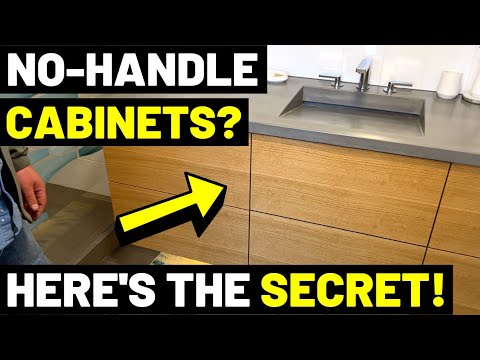
A growing number of contemporary kitchen designs feature handleless cabinets, which prioritize clean lines and visual continuity. This approach is central to modern kitchens, where the elimination of traditional hardware creates smooth, uninterrupted surfaces and emphasizes a minimalist aesthetic.
Handleless cabinets utilize advanced push-to-open mechanisms, enabling effortless access while reinforcing a clutter-free appearance. Available in luxury gloss lacquer or understated matt finishes, these cabinets accommodate diverse stylistic preferences and integrate seamlessly with other modern kitchen elements. They often incorporate custom-made design elements that ensure individuality and precision in the overall kitchen layout.
Effortless access meets minimalist design with push-to-open handleless cabinets, available in gloss or matt finishes for seamless modern integration.
The absence of protruding handles enhances spatial perception, making them particularly effective in compact layouts by maximizing openness and flow.
Ultimately, handleless cabinets embody the functional and visual priorities of modern kitchens, delivering a refined solution that underscores both efficiency and contemporary elegance without compromising practicality.
Flat-Panel Doors for Modern Simplicity

When prioritizing a streamlined, modern aesthetic, flat-panel cabinet doors deliver a distinctly sleek and minimalist appearance. Their solid, frameless construction defines the essence of contemporary kitchen cabinets, emphasizing clean lines and visual clarity. Available in a spectrum of finishes—ranging from high-gloss lacquer to subtle matte—these doors adapt seamlessly to styles from ultra-modern to Scandinavian-inspired interiors. The absence of ornate framing not only projects a clutter-free environment but also simplifies maintenance, appealing to those seeking both form and functionality in high-traffic kitchen settings. Flat-panel designs serve as a versatile canvas; they pair effectively with textured surfaces or bold hardware, allowing other kitchen features to stand out. This approach optimizes visual cohesion and enhances the perception of open, organized space within the kitchen. Integrating smart storage solutions in modern kitchens can further enhance efficiency while maintaining a stylish and sleek look.
Two-Tone Cabinets for Visual Interest

Two-tone cabinets offer designers an opportunity to balance light and dark finishes, introducing both contrast and harmony within the kitchen environment. Horizontal color block trends highlight specific zones, while the integration of mixed materials—such as wood paired with lacquer or matte with gloss—adds perceptible depth and tactile variety. This approach enhances both the visual hierarchy and the functional organization of modern kitchen layouts. Additionally, two-tone combinations create depth and dimension in kitchen cabinetry, allowing for a personalized yet cohesive design.
Balancing Light and Dark
While contemporary kitchens increasingly prioritize both functionality and style, two-tone cabinets have emerged as a sophisticated solution for introducing visual depth and dynamic contrast.
By integrating two-tone cabinetry—often with darker hues anchoring the lower cabinets and lighter shades above—designers create a foundation that adds visual interest and delineates spatial zones.
This interplay between light and dark not only enhances the perception of space but also draws the eye upward, contributing to a balanced overall aesthetic.
Popular combinations such as deep blues or forest greens with crisp whites or muted grays offer a harmonious blend of boldness and restraint.
The layered effect achieved through these contrasting finishes introduces complexity and refinement, reinforcing the modern kitchen’s dual emphasis on style and purposeful, efficient design.
Horizontal Color Block Trends
By utilizing horizontal color block trends, modern kitchens achieve a striking visual hierarchy that distinguishes functional zones and enhances spatial perception.
Two-tone cabinets serve as a primary mechanism in this approach, typically featuring darker lower cabinets anchored by lighter upper cabinetry. This configuration not only grounds the space but also introduces a sense of airiness and openness above, optimizing both function and flow in modern kitchen design.
Popular color combinations—such as deep blue or forest green bases paired with soft whites or neutral grays—provide a dynamic interplay that injects vibrancy without overwhelming the environment.
The strategic use of contrasting finishes and hues creates compelling visual interest, allowing homeowners to personalize their space while maintaining a cohesive, contemporary aesthetic that feels both sleek and fresh.
Mixing Materials for Depth
Elevating kitchen design, the integration of mixed materials through two-tone cabinetry introduces sophisticated depth and dimension to contemporary spaces.
This technique strategically combines contrasting finishes or hues—such as rich, dark lower cabinets paired with light, airy uppers—to add visual interest and architectural clarity. Designers often utilize deep blues or forest greens alongside neutral tones, achieving a harmonious yet dynamic palette.
Two-tone cabinetry serves a dual function: it visually delineates zones in open-concept layouts, distinguishing culinary workspaces from dining or social areas, while also reflecting individual style preferences.
The layered effect of these cabinets contributes to a cohesive environment, enhancing both form and functionality. By adopting this modern approach, kitchens gain complexity and a lasting impression without sacrificing visual unity or practical organization.
Slim and Hidden Handles for a Sleek Finish

Integrating slim and hidden handles into kitchen cabinetry produces a distinctly minimalist aesthetic, characterized by seamless surfaces and uninterrupted lines. In modern kitchen design, these features eliminate visual clutter, allowing cabinetry to serve as a unified backdrop rather than a segmented collection of units. Handleless cabinets, frequently employing push-to-open mechanisms, further reinforce this streamlined appearance by removing protruding hardware. The use of sleek, uni-directional handles accentuates order and creates a refined, organized environment within the kitchen. Hidden handles not only deliver a crisp visual effect but also contribute to a sense of spaciousness—especially valuable in compact modern kitchens. This approach enhances the perception of luxury, emphasizing smooth fittings and fostering an efficient flow throughout the space without sacrificing functional accessibility. To elevate the modernity of the space, consider incorporating glossy finishes that amplify natural light and highlight the clean, minimalist aesthetic.
Textured Finishes to Add Depth

Textured finishes such as matte surfaces, ribbed and fluted panels, and subtle wood grain textures introduce dimensionality and tactile appeal to modern kitchen cabinetry. These options not only create sophisticated visual layers but also serve practical purposes by concealing fingerprints and maintaining a refined appearance. The interplay of these textures supports both aesthetic versatility and functional durability within contemporary kitchen environments. Incorporating wooden accents in grey kitchens enhances visual interest and depth, further enriching the overall design.
Matte Surfaces for Sophistication
While glossy cabinetry often dominates modern kitchens, matte surfaces are increasingly favored for their ability to impart understated sophistication.
Matte kitchen cabinetry minimizes both reflections and fingerprints, offering a clean and contemporary aesthetic with practical advantages. The use of texture in matte finishes—such as subtle wood grain or stone-inspired effects—introduces visual depth, ensuring the space feels warm and inviting rather than sterile.
Matte surfaces serve as a versatile foundation that seamlessly integrates with a range of design styles, from rustic modern to industrial.
Key attributes of matte surfaces in modern kitchen design include:
- Enhanced practicality: Matte finishes resist smudges and are easier to maintain than gloss.
- Visual depth: Textured matte cabinetry introduces tactile richness and contrast.
- Design versatility: Suitable for various contemporary and transitional kitchen aesthetics.
Ribbed and Fluted Panels
Beyond the refined allure of matte cabinetry, ribbed and fluted panels introduce a compelling dimension of texture to modern kitchen design.
These textured finishes transform flat surfaces, creating a dynamic play of light and shadow that visually enriches the space. The tactile quality of ribbed and fluted panels not only adds depth and character but also serves a functional purpose by effectively camouflaging fingerprints and smudges—maintaining a polished appearance throughout daily use.
Available in a variety of materials, including natural wood and engineered finishes, these panels suit diverse design aesthetics, from minimalist to industrial.
The integration of ribbed or fluted textures allows homeowners to express individuality, making this feature a popular choice for those seeking to infuse uniqueness into their modern kitchen cabinetry.
Subtle Wood Grain Textures
By emulating the organic patterns of natural wood, subtle wood grain textures introduce a refined sense of warmth and sophistication to modern kitchen cabinetry.
These textured finishes strike a harmonious balance between sleek, contemporary design and the inviting ambiance of organic materials. Their understated tactile quality enhances visual depth without dominating the space, making them ideal for minimalist interiors.
Subtle wood grain textures also offer practical advantages by resisting fingerprints and smudges, promoting effortless maintenance and enduring elegance.
- Versatile Pairings: Subtle wood grain textures complement a wide array of colors and materials, facilitating seamless integration into two-tone cabinetry schemes.
- Dimension and Depth: Textured finishes add dimensionality to flat-panel doors, elevating the cabinetry’s architectural presence.
- Functional Durability: Engineered for resilience, these surfaces maintain a pristine appearance in high-traffic, contemporary kitchen environments.
Bold Colour Choices for a Statement Kitchen

As modern kitchen design evolves, bold colour choices such as deep blues, forest greens, and vibrant accent shades are redefining cabinetry aesthetics. These hues serve as a statement piece, infusing the kitchen with personality and visual dynamism. Designers frequently deploy rich colours on lower cabinets, contrasted by lighter upper units, to establish depth and layered interest. Vibrant accent shades like mustard yellow, whether on cabinetry or feature walls, create striking focal points and energize the space. Careful consideration of colour pairing with materials—such as matte finishes, natural stone, or brushed metals—ensures a cohesive, balanced environment. Navy blue cabinets paired with crisp white or light grey countertops create striking contrast, adding to the bold colour scheme. Ultimately, the integration of bold colour choices transforms kitchens into inviting social hubs, enhancing both function and ambiance while articulating the homeowner’s individual style.
Floating Cabinets for an Airy Feel

Floating cabinets are a prominent solution, raising storage off the floor to introduce an airy feel within the kitchen. This approach not only enhances visual spaciousness but also brings functional advantages. The minimalist aesthetic—characterized by clean lines and streamlined forms—integrates seamlessly with modern interiors. Floating cabinets are customizable, available in diverse materials and finishes, ensuring compatibility with a range of stylistic preferences. Open storage concepts help to create an uncluttered kitchen aesthetic, blending well with the design of floating cabinets. Enhanced Maintenance: The raised design allows for effortless cleaning beneath the cabinetry, promoting a clutter-free environment. Optimized Vertical Space: Floating cabinets leverage verticality for practical storage without sacrificing openness. Versatile Customization: Material and finish options enable tailored integration, from sleek contemporary to warm rustic expressions.
Open Shelving to Showcase Style

Open shelving introduces both functional efficiency and aesthetic versatility to modern kitchen design. By eliminating traditional cabinet doors, open shelving fosters a clutter-free environment and enhances organizational clarity, allowing immediate access to frequently used dishware and decorative accents.
The integration of diverse materials—such as natural wood or sleek metal—enriches visual interest and adapts seamlessly to both rustic and contemporary aesthetics. Open shelving also optimizes the space feel in compact kitchens, creating an illusion of expansiveness and facilitating the flow of natural light, which contributes to a brighter, more inviting atmosphere.
Displaying curated dishware and personal artifacts personalizes the kitchen, while regularly updated items—such as seasonal décor—ensure the space remains visually fresh without extensive renovations, reinforcing both function and design impact. Incorporating layered lighting enhances visual interest while providing practical illumination, complementing the minimalist design without clutter and supporting a calming atmosphere.
Integrated Appliances for a Streamlined Space

Beyond the visual openness achieved through shelving, the integration of appliances within cabinetry enhances the kitchen’s spatial coherence. Integrated appliances are meticulously engineered to blend seamlessly with surrounding cabinets, supporting a streamlined look essential to contemporary kitchen design. By employing custom panels and matching finishes, these appliances virtually disappear, allowing uninterrupted visual lines and maximizing spatial efficiency. This approach not only boosts aesthetic appeal but also optimizes functional flow and organization. Integrated appliances utilize concealed installation, reducing visual clutter and preserving the minimalist integrity of the kitchen. The application of consistent cabinetry finishes across appliances supports a unified, streamlined look, ensuring design continuity. Advanced technology and energy-efficient features in integrated appliances contribute to enhanced sustainability, aligning with both modern functionality and environmental considerations. In luxury kitchens, high-gloss cabinetry amplifies light, creating a stylish effect, and contributes to a sleek and fresh aesthetic.
Minimalist Hardware for a Refined Touch

Minimalist hardware solutions—such as streamlined handleless cabinetry, slim profile pulls, and hidden touch latches—prioritize clean geometry and visual cohesion in contemporary kitchen design. These elements support uninterrupted cabinet surfaces, enhancing both spatial perception and ergonomic efficiency. Their understated presence also simplifies maintenance, aligning with the functional demands of modern living spaces. Additionally, push-to-open systems provide effortless access, further supporting a refined and sleek kitchen environment.
Streamlined Handleless Cabinetry
While contemporary kitchens increasingly prioritize clarity and function, streamlined handleless cabinetry stands out for its precise, uninterrupted surfaces that define a refined, modern aesthetic.
The handleless modern kitchen utilizes advanced push-to-open mechanisms, removing traditional hardware to create a sense of effortless accessibility and visual harmony. This approach not only enhances the aesthetic but also maximizes spatial efficiency, ensuring even compact kitchens feel open and cohesive.
Material options such as gloss lacquer and matt finishes further improve versatility, allowing the cabinetry to adapt seamlessly to a range of design languages.
Key attributes of streamlined handleless cabinetry include:
- Consistent, unbroken lines that reinforce a minimalist profile.
- Functional innovation through integrated push-to-open technology.
- A versatile palette of finishes that supports diverse kitchen styles.
Slim Profile Pulls
Building upon the streamlined aesthetic established by handleless cabinetry, slim profile pulls offer a refined hardware solution that upholds the principles of modern design.
These minimalist hardware elements are meticulously engineered to minimize visual clutter, making them an ideal choice for modern cabinetry where simplicity and cleanliness are paramount.
Featuring streamlined silhouettes and finishes such as brushed nickel or matte black, slim profile pulls integrate seamlessly with contemporary surfaces without detracting from the overall composition.
Their ergonomic design enhances cabinet functionality, providing effortless access while maintaining a sophisticated, unobtrusive presence.
Available in various lengths and styles, these pulls allow for tailored integration across multiple cabinet types, ensuring visual cohesion throughout the space.
Slim profile pulls present an accessible means to refresh the kitchen environment, reinforcing a modern and elevated aesthetic.
Hidden Touch Latches
Achieving a truly seamless cabinet façade, hidden touch latches introduce an advanced hardware solution that eliminates the need for visible handles or pulls.
This minimalist approach is pivotal in curating a sleek modern kitchen, as it prioritizes uninterrupted visual lines and a clutter-free environment. The touch latch mechanism allows for effortless cabinet access with a simple push, enhancing both functionality and user experience.
Integration into a bespoke kitchen not only refines the cabinetry’s appearance but also supports a cohesive design language.
- Hidden touch latches are available in multiple finishes to complement diverse cabinet materials and colors.
- The push-to-open operation guarantees ease of use while maintaining a streamlined, modern aesthetic.
- Ideal for luxury and contemporary settings, these latches reduce visual noise, emphasizing architectural simplicity.
Glass-Front Cabinets for Subtle Display

Glass-front cabinets introduce an element of refined transparency to modern kitchen design, enabling curated dishware and glassware to become part of the overall aesthetic.
These cabinets enhance visual interest by showcasing decorative items while maintaining the sleek, uncluttered lines integral to contemporary spaces. The transparent panels foster organizational discipline, as contents remain visible, thereby reducing the likelihood of hidden clutter.
Available in both framed and frameless configurations, glass-front cabinets seamlessly integrate with a spectrum of design styles, from industrial to Scandinavian. Incorporating internal LED lighting raises the display with a soft, ambient glow, further emphasizing the visual interest of the showcased contents.
When combined with solid cabinetry, glass-front cabinets create a dynamic interplay of depth, sophistication, and functional display in the modern kitchen environment.
Warm Wood Accents for Contemporary Contrast

How can modern kitchens avoid feeling sterile amid clean lines and minimalist finishes? Integrating warm wood accents offers a strategic solution, providing both visual and tactile contrast in contemporary spaces.
Warm wood accents bring inviting texture and contrast to modern kitchens, preventing sterile atmospheres amid clean lines and minimalism.
The use of oak or walnut cabinetry, shelving, or panels can add texture and depth, counterbalancing sleek gloss or matte surfaces. This approach not only enhances aesthetic appeal but also introduces a sense of warmth and approachability to the kitchen environment.
- Textured Wood Cabinetry: Applying warm wood finishes to select cabinet fronts introduces dimensionality and tactile richness.
- Neutral Palette Pairings: Combining wood accents with neutral hues allows for effortless style updates and maintains design versatility.
- Social Atmosphere Enhancement: Warm wood elements foster a cozy, inviting ambiance, making the kitchen ideal for gatherings and daily use.
Frequently Asked Questions
How to Make a Modern Kitchen More Homely?
To make a modern kitchen more homely, one may integrate cozy accents through upholstered seating, introduce warm textures with wood or textiles, utilize open shelving for personal items, implement greenery, and select a two-tone cabinetry scheme for visual comfort.
What Are Popular Sleek Kitchen Layouts?
Popular sleek kitchen layouts include single-wall, galley, L-shaped, U-shaped, and island configurations. These designs emphasize minimalist designs and open spaces, utilizing streamlined cabinetry and integrated appliances to create visually cohesive, functional environments with ideal workflow and spatial efficiency.
What Is the New Trend in Kitchen Cabinets?
The new trend in kitchen cabinets highlights minimalist designs with handleless profiles and flat panels, while color trends feature bold hues and two-tone combinations. Textured finishes and innovative push-to-open systems emphasize both visual appeal and functional efficiency.
Are Sleek Kitchens Modern or Contemporary?
Sleek kitchens can be classified as both modern and contemporary, as they emphasize minimalist design and functional aesthetics. Visual emphasis on clean lines, flat surfaces, and innovative storage solutions blends the functional focus of modernism with contemporary stylistic flexibility.
Conclusion
In sum, today’s modern kitchen cabinet designs prioritize seamless integration, visual clarity, and functional efficiency. From handleless profiles and flat-panel doors to integrated appliances and minimalist hardware, each element contributes to a streamlined, contemporary environment. The incorporation of texture, glass fronts, and warm wood accents introduces both depth and inviting contrast. These innovative selections empower designers and homeowners alike to create kitchens that embody both aesthetic sophistication and practical usability, perfectly suiting the demands of modern living.